
Training
Martin Luther King Shoreline Tidal Wetland Restoration Field Trip
COST: FREE
REGISTRATION FOR THIS PROGRAM IS CLOSED
Contact
Grant Lyon
grant@elkhornslough.org
(831) 274-8700
Sponsors

Wetlands and Water Resources, Inc.
Save the Bay
Description
See also: Tidal Wetlands, Habitat Restoration
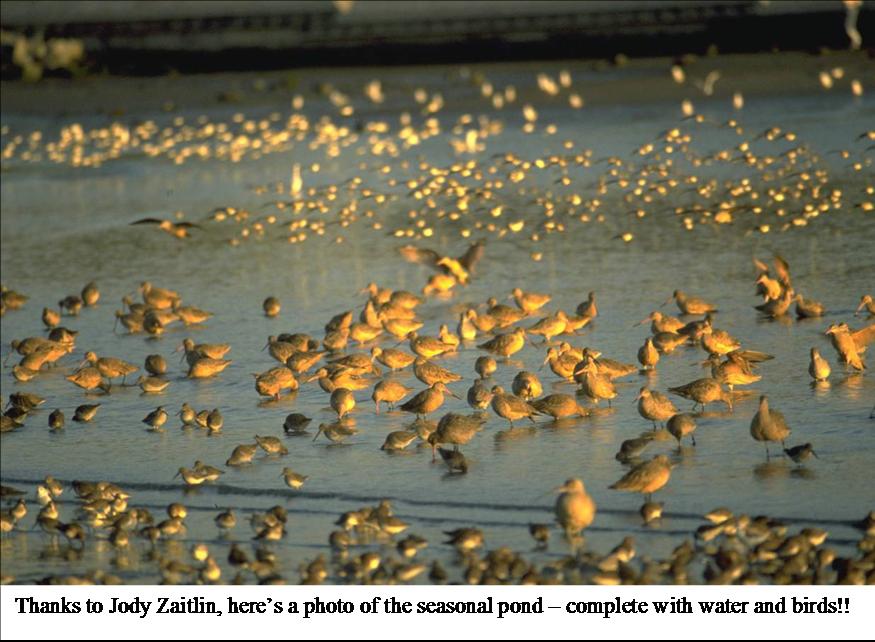
The Elkhorn Slough Coastal Training Program and San Francisco Bay National Estuarine Research Reserve sponsored a field trip with Save the Bay's Marilyn Latta and Wetlands and Water Resources, Inc.'s Stuart Siegel to the Martin Luther King Junior Regional Shoreline tidal wetlands restoration site in Oakland. The Martin Luther King Shoreline Restoration project began in 1998; it is a 72 acre restoration project in a highly urban setting that includes low and high tidal marsh, seasonal ponds, and transition zones. Though still a fairly young restoration project, it has many lessons to teach us. Major themes of discussion on the field trip included 1) public access, the role of volunteers, and the urban setting of this restoration project, 2) excavating upland habitat (through wetland fill) to create tidal marsh, 3) the importance of transition zones, 4) assessing monitoring and performance criteria, 5) and successes of seasonal pond creation. Take home messags from the trip included: 1) a single table with goals, performance measures, monitoring methodology, and monitoring schedule can greatly assist managers and regulators reviewing restoration projects; 2) it is important to tie monitoring to restoration goals - sometimes monitoring takes place that cannot inform changes in management; 3) modelling can be extremely successful in designing tidal wetland restoration; 4) transition zones, including seasonal wetlands and gradual, vegetated slopes are important areas to focus future restoration and conservatoin acquisition; 5) simple design considerations in the restoration planning stage can greatly assist in future weed management; 6) community groups and nonprofit organizations can be very helpful in long term stewardship of restoration sites; 7) involvement of community groups can assist conservation efforts; 8) providing public access to natural areas is an important political decision that can help ensure conservation success. Many thanks to Marilyn Latta, Save the Bay, and Stuart Siegel, Wetlands and Water Resources, Inc. - they did a great job teaching us some valuable lessons.
Documents and Publications
Links
East Bay Regional Parks MLK Shoreline Website
http://www.ebparks.org/parks/mlk
Golden Gate Audubon Conservation Programs: MLK Shoreline and San Leandro Bay
http://www.goldengateaudubon.org/html/conservation/wetlands_wildlands/mlkshoreline.htm
Save the Bay's MLK Shoreline Website
http://www.savesfbay.org/site/pp.asp?c=dgKLLSOwEnH&b=681493
Wetlands and Water Resources, Inc.
http://www.swampthing.org
Questions and Answers
Submit a question on this subject and we'll provide an answer. coastaltraining@elkhornsloughctp.org